
The government has merged the Department of Public Enterprises (DPE) with the finance ministry to give it a better control over state-owned firms and facilitate its ambitious privatisation programme. Finance ministry will now have six departments while DPE's hereto parent ministry, the ministry of heavy industries and public enterprises will now be called the ministry of heavy industries. Previously, the disinvestment ministry - created under the Atal Bihari Vajpayee government - was merged with the finance ministry and is now a department under it. Also, Foreign Investment Promotion Board (FIPB) was abolished and administration of foreign investments was given to the finance ministry (FinMin).

Sensex eneded 374 points higher on rate cut expectation from the RBI.

Friday's US data showed addition of 173,000 jobs in August.

Mallya left the country on March 2 and has had his passport revoked.

The share of listed public sector undertakings (PSUs) in the overall market capitalisation has hit a three-year high of 11.4 per cent. This comes on the back of the sharp outperformance of the PSU pack over the past two years. In 2021 and 2022, the BSE PSU index gained 41 per cent and 23 per cent, respectively. Market participants said a combination of factors like value buying and bullishness, particularly in public sector banks (PSBs), were the reason for the improved prospects.

The Ethics Committee of Rajya Sabha headed by veteran Congress leader Karan Singh, decided to give Mallya one week time to explain his conduct.

The recent weakness of the rupee has been due to yuan's devaluation.

The government on Wednesday announced the appointment of veteran banker K V Kamath as chairperson of the newly set up Rs 20,000 crore development finance institution NaBFID to catalyse investment in the funds-starved infrastructure sector. Parliament had in March cleared the National Bank for Financing Infrastructure and Development (NaBFID) Bill 2021 to support the development of long-term non-recourse infrastructure financing in India, including the development of the bonds and derivatives markets necessary for infrastructure financing.

The divestment process, however, will not be an easy affair as there are multiple stakeholders, including the employee unions, whose concerns will have to be addressed.

However, in the last few sessions, the stock of Mukesh Ambani-controlled Reliance Industries Limited (RIL), hit its 52-week low level of Rs 2269.75, and has been one of the worst performers among the Sensex pack thus far in calendar year 2023 (CY23). Thus far in CY23, RIL has tanked nearly 11 per cent as compared to a fall of around 5 per cent in the S&P BSE Sensex. The fall in the stock, according to Gaurang Shah, senior vice-president at Geojit Financial Services is mostly due to the overall dip in the market sentiment, which in turn has impacted large-caps, including RIL.

Over 25,600 cases of banking fraud reported up to December 21, 2017, says Minister RS Prasad.

Heads of various public and private sector banks on Thursday sought to present a counter-narrative on RBI Governor Shaktikanta Das warning lenders about the perils of extreme risk aversion in the pandemic-stricken environment where credit demand is on the wane.
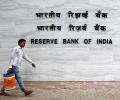
Given the pressure from India Inc and the banking fraternity, it is surmised that the portfolio rejig will take place before April.

Sundararaman Ramamurthy has been an interesting choice for the publicly-listed BSE, which has seen its chief move to bigger rival -- the National Stock Exchange (NSE) -- in July. Having spent nearly two decades at the country's largest bourse, Ramamurthy is among the early architects of NSE and understands all the cogs of the exchange wheel like only a few others in the country. Just like NSE's core team, which includes its founder RH Patil, the 59-year-old Ramamurthy has worked at the Industrial Development Bank of India (IDBI) before moving to NSE in 1995.

RBI's steps will prevent rupee from slipping, even if OMCs meet entire $ demand from market
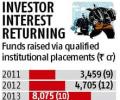
The return of investor confidence in the equity markets is bringing some of the large companies back to the fund-raising table.

Once these banks start showing losses, they will not be able to pay dividends to the government nor pay taxes, which will further aggravate the situation for the government as its return on investment as an investor would be very negligible for the next few years, says M V Subramanian.

The next phase is when factors such as prison conditions in India are likely to take centre-stage.

Valuers have found almost no assets to pay for their claims against the Videocon group that entered the insolvency process in 2018. But the dissenters suggest that the money is elsewhere, possibly in the group's oil and gas assets, which are not part of the group's bankruptcy case.

If banks cannot charge interest from borrowers during the moratorium, who will bear that cost? Should the depositors subsidise the borrowers by foregoing interest on deposits? In that case, we will turn banking on its head! notes Tamal Bandyopadhyay.

'Flush with funds, lending became a cash management exercise.' 'Road projects, power generation plants, airports etc were financed left and right with apparently no regard for the projects' ability to repay,' explains S Muralidharan, former managing director, BNP Paribas.

'The correction could take two to three months and traders need to be careful.' 'For investors, this could be a good time to nibble in.'
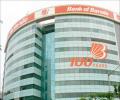
The banks used for the fraud include ING Vysya Bank, ICICI Bank, Kotak Mahindra Bank, Axis Bank, IndusInd Bank, Dhanlaxmi Bank, YES Bank and DCB Bank.

Beleaguered businessman Vijay Mallya had made at least four trips abroad before his controversial March 2 departure since a look-out notice was issued by CBI on October 16 last to know his movements.

The sharp correction in equity markets has taken a toll on mid-and-small cap stocks that have underperformed their large-cap peers. Thus far in calendar year 2022 (CY22), the mid-and-small cap indexes on the BSE have slipped over 8 per cent and 7 per cent respectively, as compared to a fall of around 6 per cent in the S&P BSE Sensex. While investors dumped mid-and small-cap stocks as the markets remained choppy over the past few weeks, analysts still expect these two segments to see good investor interest from a medium-to-long term perspective.

Traders believe the RBI will step in more strongly, if the rupee starts falling towards 65

To provide exporters/importers greater flexibility in risk management, RBI enhanced the limit available to exporters to 50 per cent

Inflation indexed bonds assure a positive return over inflation.

The brand new bankruptcy process is being brazenly gamed by those with connections and money. The touts and fixers of the previous regime have been replaced by a new set close to this one, observes Debashis Basu.

While weather forecasters remain divided on how the monsoons will play out in India over the next few months, analysts believe the news at the current juncture - at best - can trigger a knee-jerk reaction in the markets. They believe it is too early to say whether the sub-par monsoon on account of El Nino can seriously dent the market sentiment in the short-to-medium term. "These are just initial forecasts and we will have another round / status update from the weather forecasters a month down the line.

The rupee will largely remain stable but with a mild depreciating bias in the next one year

Around 75 per cent, or 372 stocks, that are part of the BSE500 are trading at least 10 per cent below their all-time high levels, despite the index hitting a record high 20,515 points on the BSE in intra-day trade on Wednesday, surpassing its previous high of 20,390 touched in March 12. The index, which accounts for 93 per cent of BSE listed companies' market capitalisation, has gained 8 per cent from its recent low of 18,983, touched on April 19. In comparison, the benchmark S&P BSE Sensex gained 6 per cent over the same period, but is still nearly 4.5 per cent away from its all-time high of 52,517 that it hit on February 16.

Tomorrow's review could also turn out be the last policy anchored by Rajan if the proposed Monetary Policy Committee (MPC) is put in place before the next review due on August 9.

Broader markers outperformed their larger peers.

Foreign institutional investors (FIIs) are set to pump in more funds in debt securities, as the next government under the Bharatiya Janata Party (BJP) is expected to be a stable one and is seen as growth-oriented by market participants.
.jpg)
A weak rupee makes imports costlier, including oil and other commodities.

From crisis leaders to future Goliaths, India Inc saw them all in 2017, says Shailesh Dobhal.
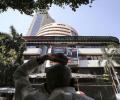
The Sensex has hit its lowest level since August 29, 2016 whereas the Nifty hit its lowest level since Sep 12, 2016

A lot of mid and small-caps are in the bubble zone and command high valuation and have corrected sharply.

Sensex, Nifty end the day in red on unfavourable cues from global markets.
 © 2026 Rediff.com - Advertise with us - Disclaimer - Privacy Policy - Sitemap - Feedback - About us - Terms of use - Grievances